
Authorized AMSOIL Dealer
Joseph Feghali
Miami, FL

1981 Ford Mustang 4.2L Oil Type and Capacity

Free Vehicle Maintenance App

For cars, trucks, ATVs & more

Track oil changes, save service records, and get maintenance reminders.

Keep your maintenance history handy for your next service.

Your Vehicle's Information

Year:

1981

Make:

Ford

Model:

MUSTANG

Engine Size:

4.2L

Engine #:

[D]

Recommended Synthetic Oil for a 1981 Ford Mustang 4.2L

Product Name Product Description Capacities Product
Signature Series 5W-30 Synthetic Motor Oil Save time and money and costly repairs at the auto shop! Amsoil has your back! Bullet proof your Mustang's engine! With filter 4.5 quarts Some engines may have 2 oil drain plugs. After refill, check ASLQT-EA
Signature Series 5W-30 Synthetic Motor Oil ASLQT-EA
Add To Cart
Add To Cart
XL 5W-30 Synthetic Motor Oil Protect your Mustang with the best synthetic oil! Amsoil backs up all claims with proof! Support American Oil! With filter 4.5 quarts Some engines may have 2 oil drain plugs. After refill, check XLFQT-EA
XL 5W-30 Synthetic Motor Oil XLFQT-EA
Add To Cart
Add To Cart
OE 5W-30 Synthetic Motor Oil AMSOIL OE Synthetic Motor Oil is specially made for the extended oil change intervals recommended for your 1981 Ford Mustang 4.2L. It has advanced synthetic technology that resists chemical breakdown for maximum wear protection for your vehicle which is well beyond the traditional 3,000-mile oil change interval. With filter 4.5 quarts Some engines may have 2 oil drain plugs. After refill, check OEFQT-EA
OE 5W-30 Synthetic Motor Oil OEFQT-EA
Add To Cart
Add To Cart

Recommended oil filters for my 1981 Mustang

Product Name Product Description Product
AMSOIL Ea Oil Filters This filter is for your 1981 Ford Mustang and is designed to last up to 25k (normal conditions) or 15k miles (severe conditions) or 1 year, whichever comes first. EAO15-EA
AMSOIL Ea Oil Filters EAO15-EA
Add To Cart
Add To Cart
WIX Oil Filter Wix oil filters for your 1981 Ford Mustang have extended OEM recommendations which match the drain intervals of AMSOIL XL synthetic motor oil which is 12k or 1 year, whichever is first. 51515-EA
WIX Oil Filter 51515-EA
Add To Cart
Add To Cart

Recommended transmission fluids for my 1981 Mustang

Product Name Note Capacities Product Description Product
Signature Series Multi-Vehicle Synthetic Automatic Transmission Fluid Automatic Transmission Fluid
(1) This specification has been updated from Mercon to Mercon V per TSB 06-14-4
3 speed C3 Total Fill 8 quarts 3 quarts Initial Fill
3 speed C4 Total Fill 7.4 quarts 3 quarts Initial Fill
Amsoil's Signature Series Multi-Vehicle Synthetic automatic transmission fluid is made to blow the doors off any regular or conventional ATF fluids on the market and our oil surpasses the performance needs of most vehicles. Protect your transmission and avoid costly repairs. This fluid has an advanced formula to give awesome top-notch protection under harsh operating conditions. Transmission repairs are expensive so protect your vehicle with this great fluid! ATFPK-EA
Signature Series Multi-Vehicle Synthetic Automatic Transmission Fluid ATFPK-EA
Add To Cart
Add To Cart
OE Multi-Vehicle Synthetic Automatic Transmission Fluid Automatic Transmission Fluid
(1) This specification has been updated from Mercon to Mercon V per TSB 06-14-4
3 speed C3 Total Fill 8 quarts 3 quarts Initial Fill
3 speed C4 Total Fill 7.4 quarts 3 quarts Initial Fill
Outsanding protection and resists varnish! Change interval based on your Mustang's recommendation. OTFQT-EA
OE Multi-Vehicle Synthetic Automatic Transmission Fluid OTFQT-EA
Add To Cart
Add To Cart
Torque-Drive® Synthetic Automatic Transmission Fluid Automatic Transmission Fluid
(1) This specification has been updated from Mercon to Mercon V per TSB 06-14-4
3 speed C3 Total Fill 8 quarts 3 quarts Initial Fill
3 speed C4 Total Fill 7.4 quarts 3 quarts Initial Fill
Awesome protection under extreme temperature! Protect heavy-duty transmissions with this made in the USA oil. Follow the service interval in your owner's manual. Protect your Ford. ATD1G-EA
Torque-Drive® Synthetic Automatic Transmission Fluid ATD1G-EA
Add To Cart
Add To Cart

Differential for my Ford Mustang

Product Name Note Capacities Product Description Product
SEVERE GEAR® 80W-90 (1) Identification: see upper left differential tag, code on plate at driver's door. Rear 3.6 pints
WFZ Rear 3.8 pints
WGG Rear 2.5 pints
This lube is made to exceed the requirements of equipment and all vehicles that require SAE 80W-90 viscosity. It is made with synthetic base oils and top additives without adding any wax. Amsoil Severe Gear is solid against thermal breakdown. Will give you awesome protection for bearings and gears and tough against heat which will help extend the life of your equipment and avoid costly repairs. Made in the U.S.A. AGLPK-EA
SEVERE GEAR® 80W-90 AGLPK-EA
Add To Cart
Add To Cart
SEVERE GEAR® 75W-90 (1) Identification: see upper left differential tag, code on plate at driver's door. Rear 3.6 pints
WFZ Rear 3.8 pints
WGG Rear 2.5 pints
This special formula is made for harsh operating conditions that pick-up trucks endure. Also top-notch protection for SUVs, heavy equipment, and other heavy-duty vehicles. Made in the USA. SVGPK-EA
SEVERE GEAR® 75W-90 SVGPK-EA
Add To Cart
Add To Cart
SEVERE GEAR® 75W-110 (1) Identification: see upper left differential tag, code on plate at driver's door. Rear 3.6 pints
WFZ Rear 3.8 pints
WGG Rear 2.5 pints
This is a fantastic lubricant for towing trailers, heavy duty hauling, off road driving/4x4, commercial applications, and for race enthusiasts. This severe gear lube will protect bearings, gears from friction and exceeds performance of any regular gear oil out there! Keep your truck or vehicle out of the shop and avoid costly repairs with this made in the USA lube. SVTPK-EA
SEVERE GEAR® 75W-110 SVTPK-EA
Add To Cart
Add To Cart

Recommended coolants for my Ford Mustang

Product Name Product Description Capacities Product
Passenger Car & Light Truck Antifreeze & Coolant maximum protection for your 1981 Ford Mustang under extreme temperatures and operating conditions! Lasts up to 150,000 miles or five years! (whichever comes first) ANTPC1G-EA
Passenger Car & Light Truck Antifreeze & Coolant ANTPC1G-EA
Add To Cart
Add To Cart
Low Toxicity Antifreeze and Engine Coolant Lasts in your 1981 Ford Mustang for up to 150,000 miles or five years! (whichever comes first). Biodegradable! ANT1G-EA
Low Toxicity Antifreeze and Engine Coolant ANT1G-EA
Add To Cart
Add To Cart

Lubrication Maintenance for the 1981 Ford MUSTANG 4.2L

Maintaining the engine lubrication system in a vehicle like the 1981 Ford Mustang with the 4.2L engine requires consistent attention to fluid condition and component integrity. Proper lubrication is fundamental to managing the internal friction and thermal loads generated during operation. For owners of this specific model, staying proactive with inspections can help identify potential issues before they escalate into more significant mechanical concerns.

Monitoring Fluid Condition and Potential Leaks

One of the most effective ways to monitor the health of the lubrication system is through regular visual inspections. When checking the engine bay, look for any signs of fluid seepage or active leaks around various sealing surfaces. Even small amounts of oil appearing on the exterior of the engine block or near gaskets can indicate that a seal is beginning to lose its effectiveness due to age or heat cycles.

It is also useful to observe the appearance of the lubricant itself during routine checks. While some discoloration is expected as oil ages and collects microscopic debris, significant changes in texture or an unusual odor may warrant further investigation. If you notice any evidence of fluid pooling under the vehicle after it has been parked, this should be addressed promptly to prevent unexpected oil loss during driving.

Observing Potential Warning Signs

While many lubrication issues manifest slowly, certain symptoms can indicate that the engine requires immediate attention. Owners should remain vigilant for any changes in how the vehicle operates or sounds. For example, unusual mechanical noises that coincide with engine operation may be associated with insufficient lubrication or changes in fluid viscosity.

If a warning light or indicator related to oil levels or pressure becomes active on the dashboard, it is critical to stop and investigate immediately. Such indicators can stem from various causes, ranging from low fluid levels to issues within the lubrication delivery system. Additionally, any visible smoke from the exhaust that appears unusual should be monitored, as it may indicate that oil is entering the combustion process. Because these symptoms can have multiple underlying causes, they should always be treated as a prompt for professional diagnostic inspection rather than an immediate diagnosis of a specific part failure.

Managing Long-Term Engine Care

As vehicles age, maintenance priorities often shift from strictly following mileage intervals to focusing on the actual condition of the components. For a 1981 Mustang, establishing a clear baseline of the engine's current state is highly beneficial, especially if the previous service history is incomplete or unknown. Reviewing any available repair records can provide insight into what has already been addressed and what might be approaching the end of its service life.

When maintenance records are unavailable, prioritize inspecting aging materials. This includes checking the condition of various hoses, if present, and ensuring that electrical connections related to engine sensors remain secure and free from corrosion. Rather than replacing parts based solely on the age of the vehicle, a more effective strategy is to address active leaks or observed changes in fluid consumption first. This condition-based approach ensures that maintenance efforts are directed where they are most needed for the continued operation of the 4.2L engine.

Inspecting Auxiliary Engine Components

A comprehensive look at the engine compartment should include more than just the oil itself. If equipped, accessible drive belts should be inspected for signs of wear such as cracking, glazing, or fraying. These components are vital for the operation of various engine accessories, and their condition can impact overall engine performance.

Furthermore, if the vehicle is equipped with a cooling system, checking for visible leaks in hoses or connections is a prudent part of routine service. Maintaining proper thermal management is closely linked to how the engine oil performs, as excessive heat can accelerate the breakdown of the lubricant. Regularly checking the air filtration system is also important, as clean airflow helps prevent contaminants from entering the engine environment.

Establishing a Maintenance Baseline

For many owners of classic or older vehicles, the goal is to move from reactive repairs to a structured preventive maintenance routine. This begins with documenting every oil change, filter replacement, and fluid service. Keeping a detailed log allows you to identify patterns, such as a gradual increase in oil consumption or a specific interval where certain components seem to require attention.

If you are taking over the ownership of this Mustang, your first priority should be to verify the current state of all vital fluids and filters. Once you have confirmed that the engine is operating within normal parameters, you can establish a reliable schedule for future service. This disciplined approach helps in distinguishing between necessary preventive maintenance and unnecessary parts replacement, ultimately supporting the long-term preservation of the vehicle.

Practical Guidance for BUYING ENGINE OIL for your 1981 Ford MUSTANG 4.2L

When it is time to replenish the lubrication in your engine, selecting a product that aligns with the specific needs of your application is essential. To ensure you are using the correct lubricant, always match the engine oil to the vehicle-specific viscosity and application information already displayed on this webpage.

As you shop for products, consider the following practical steps:

  • Verify Product Labels: Always check the container labeling to confirm that the SAE viscosity matches the requirements listed in your application data.
  • Consider Formulations: Depending on the current condition of your engine, you may encounter various options such as conventional oil, synthetic blends, or full synthetic oils. Some high-mileage formulations also contain additives intended for use in aging engines, including seal-conditioning additives.
  • Check Certifications: Look for appropriate API certifications on the bottle to ensure the oil meets modern quality and performance standards.
  • Avoid Assumptions: Do not rely on general automotive knowledge or assumptions based on the vehicle's age to select a grade; always defer to the specific information provided in the technical specifications above.
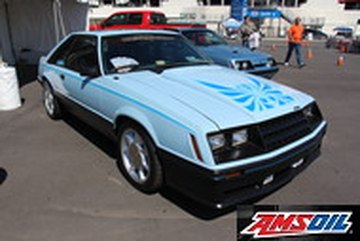
Catalog vehicle photograph for 1981 Ford MUSTANG
Vehicle photograph from our catalog. Appearance may differ by model or trim.
Visit us on social media
